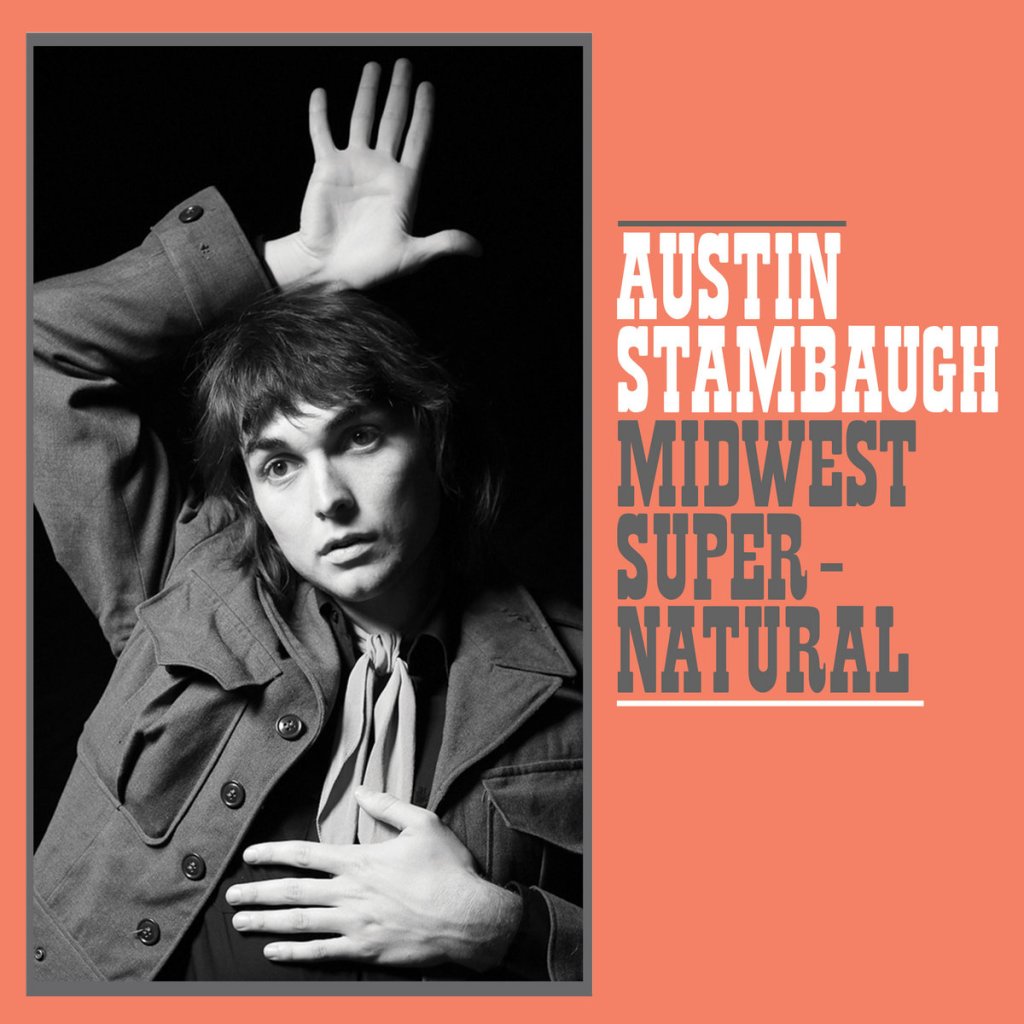
A beautiful melody appears like the opening of an antique music box in “Let’s Be Brothers Here.” A soothing note from a dobro sits you on a late night front porch with your family and friends. Bass and fiddle are layered in for a bright and vibrant instrumental section.
“The song ends so soon and there’s so much more to say,” Stambaugh sings. “So much we can be, so much we can see if we get out of our way.”
The track appears toward the end of Austin Stambaugh’s debut album Midwest Supernatural for Anti-Corp Music. The album was engineered by Dan Emery and co-produced by Benjamin Tod from the Lost Dog Street Band.
Austin Stambaugh’s LaGrange upbringing
The Nashville based songwriter grew up in LaGrange, a small Northeast Ohio town that sits among farmland on the outskirts of Cleveland. We caught up with Stambaugh on his recent Texas tour.
“I had a plethora of influence being from a small town, and family, and growing up in a Baptist church,” Stambaugh said. “Going next door across the city municipal area into Oberlin and seeing a lot of the culture there was like culture shock. I felt like I was in the middle of everything. You could drive ten minutes and go see a real life Andy Warhol painting, but I also grew up in the conservative Christian life.”
Stambaugh’s parents performed in the church band and Austin started playing guitar at ten years old. His father was in a power-pop band in the 80s, and a photo from a live performance hung in the hallway that inspired him to pick up the instrument.
“I remember just thinking like ‘that’s what I need to do.’ Just knowing that I was going to play guitar for the rest of my life,” Stambaugh said. “It was weird, I was blessed with that from an early age, but it still hurts to grow no matter what- if you’re a plant or if you’re a cactus you know?”
Stambaugh is mainly self taught on the instrument, and his ability to craft a timeless melody is apparent in “Let’s Be Brothers Here.”
“I’m a generational guitarist but the way I discovered the guitar was very much on my own personal study,” Stambaugh said. His father showed him some basic chords and friends showed him AC/DC riffs, but that was the extent of his formal training.
“It takes a village to raise a child so I was definitely raised by a lot of cool cats in the Midwest,” Stambaugh said. “I was raised on the Les Paul Marshall stack dudes.”
Austin Stambaugh’s high school group
In high school, Stambaugh worked to bend genres and formed a band called the Shauns where volume was key. They were described as “not cookie cutter” by a judge at a battle of the bands contest.
“I would come up with the music with the band and just sing ad-lib lyrics,” Stambaugh said. “I didn’t even like have lyrics to the songs. I just sang anything, even not real words. It was just like a feeling you know? We never spoke in tongues in the church I grew up in, but I feel like I identify with people who do that.”
The turn towards country music came from hearing Bob Dylan’s Blonde on Blonde album as a teenager. After going down the pathway of discovery through Dylan’s influences from Leadbelly to Jimmie Rodgers and singing church hymns at home, Stambaugh gravitated towards songwriting.
“I feel like me getting into country music was already kind of there because I knew the traditional means of yearning when you sing,” Stambaugh said. “Really singing out in a congregation and not actually being heard. Sing for the feeling of it and not for the sound of it you know? I had already been studying it my whole life.”
Austin Stambaugh moves to Nashville
Stambaugh decided at a young age that he was destined to become a guitar slinger on the Nashville scene.
“I remember trying to move to Nashville when I was 18 but I didn’t have the guts,” Stambaugh said, “and none of my friends would go with me. And that’s a very valuable lesson to learn early is that none of your friends will go with you. You’ve got to do it all by yourself and if you start something your friends might come and follow you, that’s how it works… Nashville was always a dream for me.”
Stambaugh wanted to join the Don Kelley Band, the house band at the famed Robert’s Western World on Broadway that features the scene’s fastest rising talent. He took on a door job at the club and started performing a four hour slot of classic country and original songs on Sundays. He quickly discovered that the showmanship of being a lead guitarist was not his calling, and that songwriting was in his soul.
Since being in Nashville, Stambaugh has hosted a songwriters circle and showcase at the American Legion 82, found homegrown support from Dee’s Country Cocktail Lounge and performed in a tour with Ernest Tubb’s band with Tubb’s famous “Sho-bud” guitar. Stambaugh worked the counter at Tubb’s Record Store in the heart of the entertainment district before its closing.
“The big thing that I learned in Nashville was people want to hear the simple bread and butter and potatoes of a performance,” Stambaugh said. “They want to hear somebody unlock the grid of their own voice. They want somebody to go up there and actually sing something from their gut and take short, big gasps in between their measures, and just step out, and to be seen, so you kind of got to break out of your shell.”
Stambaugh said that finding true belief in yourself is the key to creating his art, and that people connect to something when the artist is fearless enough to share what moves them.
“It’s better to be yourself and be really small than it is to be something that you’re not and try to impress the gallery, you know,” Stambaugh said.
Austin Stambaugh joins Anti-Corp Music
Stambaugh first connected with Anti-Corp through songwriter Ivan Macleod, former drummer for Lost Dog Street Band and host of the Magnolia Sessions. A live EP was recorded outdoors with Stambaugh performing solo, and released by Anti-Corp in 2021. He eventually became roommates with the Lost Dog Street band and the opportunity to record Midwest Supernatural came this summer.
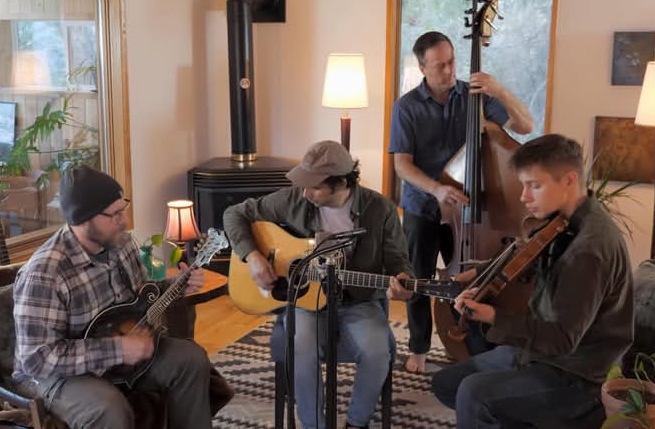
Stephen “Tebbs” Karney plays dobro and pedal steel. Jared Manzo plays bass fiddle. Derek Pell plays fiddle & violin. John McTigue III plays drums and percussion. The album was recorded live in studio with minimal adjustments.
“They’re dudes that I’ve known for years as my life as a bar worker in Nashville,” Stambaugh said. “I got just the best group of dudes that I could get together that I knew believed in me but also kind of had a friendly respect… people that I looked up to. I wanted to embody the Robert’s Western World House Band, because they play (there) all the time, and I wanted to nod to that time in my life. It’s a document for classic country music, and country music instrumentation that’s done in a very roundabout way.”
Stambaugh’s work ethic from consuming novels weekly to daily writing and staying glued to his Martin guitar are incredibly inspiring to view. Though it comes across as effortless, his work has so much preparation that hides underneath the surface.
Midwest Supernatural is an impressive debut album with dense storytelling and wonderful instrumentation. “Jim Given of LaGrange” is a standout biographical work about his grandfather. “Big Engine Blue” provides a joyful, family style atmosphere that will stick in your head. “‘Til I Reach Downtown” is a classic country song that brings modern times into the past. “My Pennsylvania Girl” is a heartfelt song about the next chapter in life that delivers one of his most prolific lines “such a shame she’s not the same girl she never was before to the kid I can no longer be.” This album is truly a gift for any fan of songwriting with a close attention to detail that doesn’t go unnoticed.
Learn more about Austin Stambaugh here.
Follow Quality Americana for your Song of the Day.

 Quality Americana
Leave a comment